
Probate in Kitsap County Superior Court
Probate is the legal process of settling a deceased person's estate under court supervision. In Kitsap County, all probate matters go through Superior Court. That includes opening an estate with or without a will, appointing an executor or administrator, and handling guardianship or conservatorship for people who cannot manage their own affairs. The Clerk of the Superior Court receives and maintains every probate filing.
Guardianship cases are also filed here. A guardianship gives one person legal authority to make decisions for another who lacks capacity, whether an adult or a minor. Conservatorship deals more specifically with managing the financial assets of a protected person. Both types of cases follow a similar opening workflow, though the fees and forms differ. The Clerk's probate page frames its instructions as a helpful guide and explicitly recommends consulting an attorney for additional help.
Probate can touch real property, taxes, creditor claims, and fiduciary duties. The Clerk provides forms and filing logistics but cannot give legal advice. If the estate involves real estate, large accounts, or disputed heirs, legal counsel is worth the cost. That said, straightforward estates with a clear will and cooperative heirs are sometimes handled without an attorney using the Clerk's kits.
Probate Terms Used in Kitsap Filings
Court filings use specific legal words. These terms come up in every Kitsap probate case. Knowing them helps you read the documents the Clerk gives you and understand what the judge signs at the ex parte window.
- Testator
- The person who made and signed the will. When that person dies, the will is submitted to the court for review and admission to probate.
- Executor
- The person named in the will to carry out its terms. After the court admits the will, the executor receives Letters Testamentary, the official paper that proves their authority to act on behalf of the estate.
- Administrator
- When there is no will, or when the named executor cannot serve, the court appoints an administrator. That person receives Letters of Administration instead of Letters Testamentary, but the duties are largely the same.
- Intestate
- Dying without a valid will. Washington state law then controls how the estate is distributed. The rules favor a surviving spouse, then children, then other relatives in order.
- Letters Testamentary
- The court-issued document that gives an executor legal authority to collect assets, pay debts, and distribute the estate. Banks and other institutions require this paper before they will release funds to the executor.
- Guardianship
- A court order giving one person (the guardian) authority to make personal decisions for another person who lacks the capacity to make those decisions independently. Kitsap Superior Court hears both adult and minor guardianships.
- Conservatorship
- Similar to guardianship but focused on financial management. A conservator handles the money, property, and financial accounts of a protected person. A case can involve both a guardian and a conservator, or one person can hold both roles.
Kitsap County Clerk Probate Office
The Clerk's office in Room 202 is the starting point for all probate filings. You bring your documents here, pay the filing fee, and then present your opening order at the ex parte window. The Clerk's staff can tell you which forms to use and whether your documents are complete, but they cannot fill out forms or give legal advice.
Kitsap County Clerk
614 Division Street, Room 202
Port Orchard, WA 98366
360-337-7164
Mon-Fri 8:00 am - 12:15 pm and 1:15 pm - 4:30 pm
Ex parte court for probate runs Monday through Friday at 8:30 a.m. It also runs Monday, Thursday, and Friday at 3:30 p.m. You must arrive at least 20 minutes before the scheduled time. Late arrival can mean waiting until the next session. The Clerk's office does not have a notary on site, so the oath must be notarized before you arrive.
Opening a Probate in Kitsap County
The Clerk's probate guide lists seven documents you may need to open an estate. Items one through six are the minimum required to appear at ex parte. Item seven covers forms that may be needed after the case is open. The judge may also require additional forms on a case-by-case basis, so it is worth calling the Clerk or checking the official probate page before your first visit.
The Clerk's own probate opening instructions page is shown below. It walks through the document list, payment rules, and ex parte schedule in one place.
The screenshot above comes from the Kitsap County Clerk probate information page, which is updated when the Clerk changes its procedures.
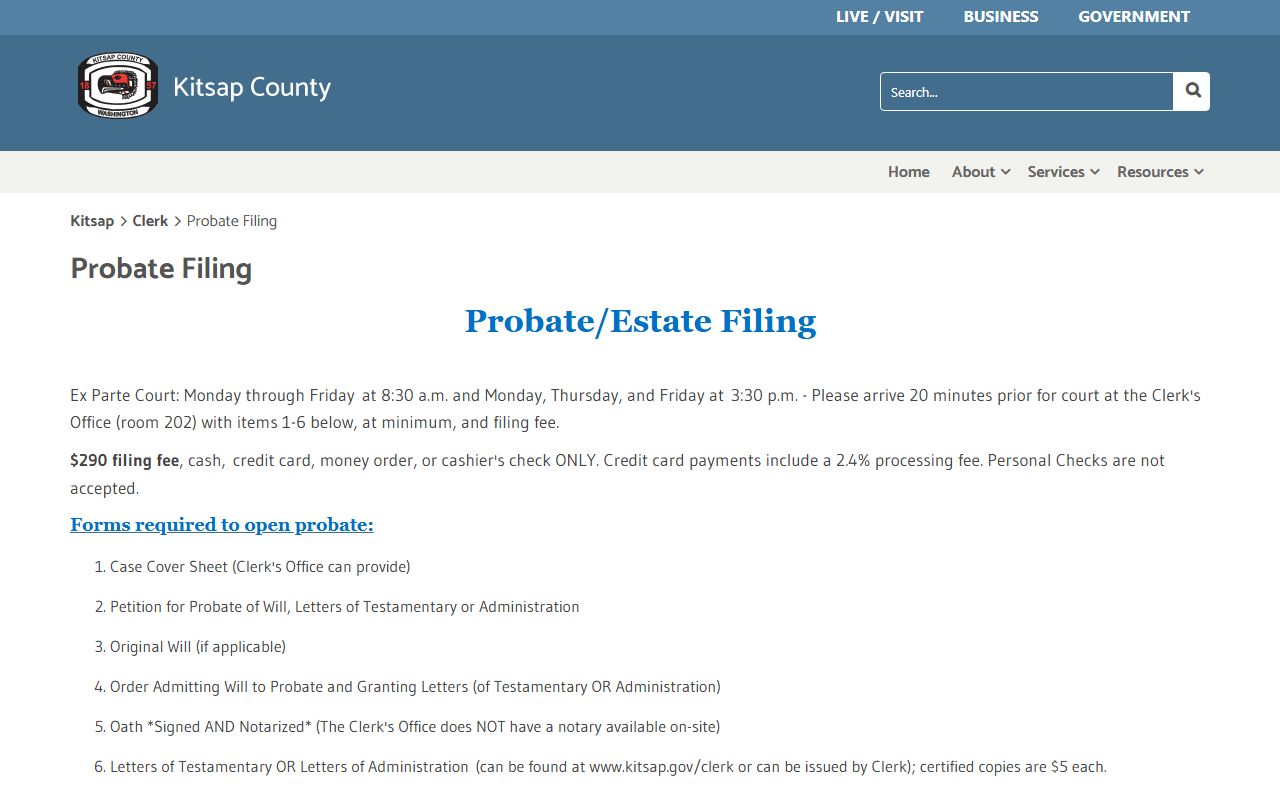
Reviewing that page before your first trip confirms the exact documents and ex parte times for the current term, since the Clerk updates its instructions periodically.
- Case Cover Sheet. The Clerk's office can provide this form. It identifies the case type and parties.
- Petition for Probate of Will, Letters Testamentary, or Administration. This is the main document that asks the court to admit the will (if one exists) and appoint the executor or administrator.
- Original Will, if applicable. The original must be submitted, not a copy. If no will exists, proceed without this document and note that the estate is intestate.
- Order Admitting Will to Probate and Granting Letters Testamentary or Administration. This is the proposed order the judge signs at ex parte. Draft it carefully before you arrive.
- Oath, signed and notarized. The oath must be notarized before you come to the Clerk. The Clerk's office does not have a notary on site, so arrange this in advance.
- Letters Testamentary or Letters of Administration. The Clerk issues certified copies after the judge signs the order. Each certified copy costs $5.
- Post-opening forms, as needed. These may include the Probate Notice to Creditors, Notice of Appointment, and Receipt and Waiver of Heirs, depending on how the estate develops.
Kitsap County Probate Filing Fees
The filing fee to open a probate case in Kitsap County is $290. Payment must be by cash, credit card, money order, or cashier's check. Credit card payments include a 2.4% processing fee. Personal checks are not accepted. The Clerk's forms and kits page also sells packet kits for different probate and guardianship situations at separate prices.
| Item | Amount |
|---|---|
| Probate filing fee (opens the case) | $290 |
| Certified Letters Testamentary or Administration (each) | $5 |
| Starting Probate with a Will kit | $15 |
| Starting Probate without a Will kit | $15 |
| Starting a New Guardianship kit | $25 |
| Periodic Guardianship Accounting kit | $10 |
| Agreed Minor Guardianship kit | $40 |
| Contested Minor Guardianship kit | $50 |
All kit sales are final. The Clerk does not offer refunds or exchanges, and kits may not be resold. Kits can be mailed after you complete the order form, though mailed kits can take 7 to 10 business days. Download links, if offered, may be emailed within 1 to 2 business days and expire two days after sending.
The Clerk's forms and kits page is shown below, which lists every available probate and guardianship kit with current prices.
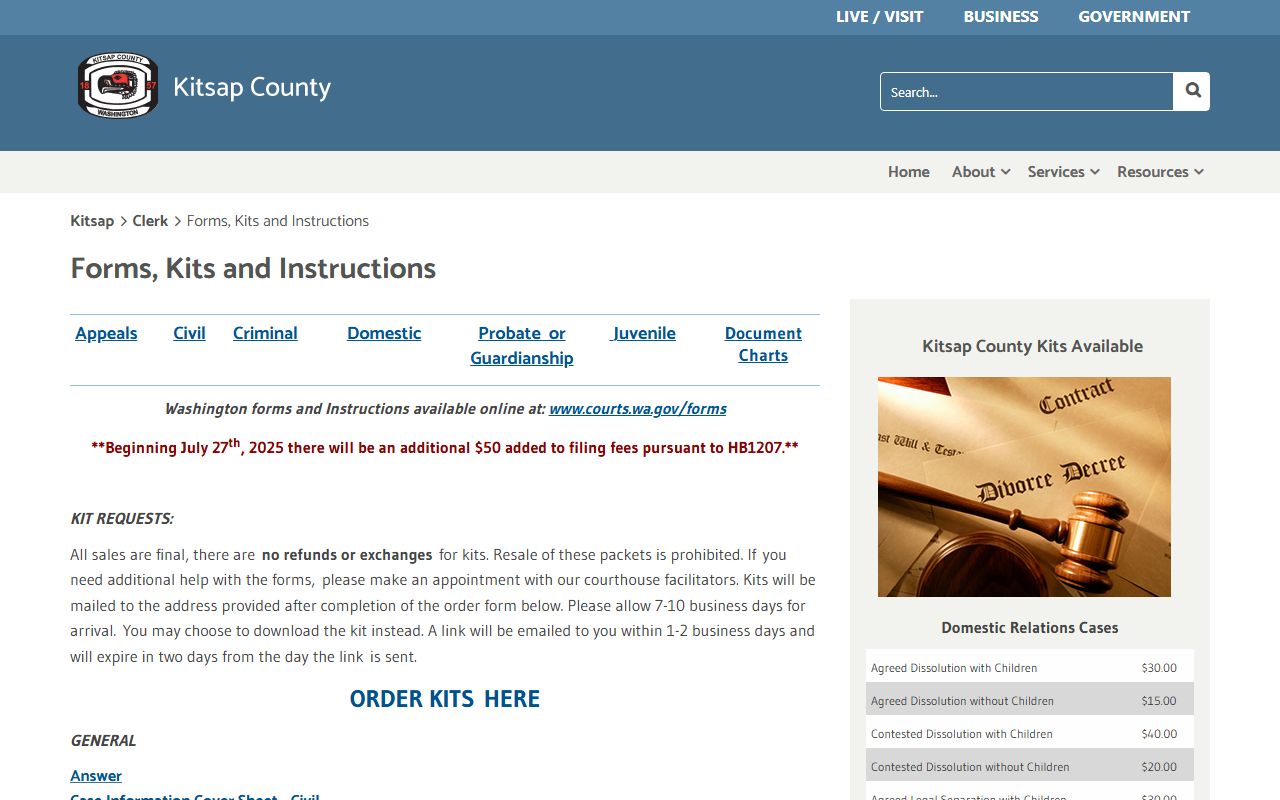
The Clerk's forms, kits, and instructions page also links local Superior Court rule forms and statewide Washington Courts forms that apply to probate cases.
How Kitsap County Probate Works, Step by Step
The Clerk's guide breaks the process into clear stages. The steps below follow the official Kitsap workflow for opening and managing a probate case. The judge may add requirements at any step, so treat this as the standard path, not a guarantee of how your specific case will unfold.
- Determine whether probate is needed. Small estates in Washington may qualify for a simplified process without full probate. If the estate has assets that require a court order to transfer, probate is likely necessary. Check whether there is an original will, and locate it before filing.
- Prepare the opening documents. Draft the Case Cover Sheet, Petition, proposed Order, Oath, and Letters. Make sure the Oath is signed and notarized before you arrive. The Clerk does not have a notary on site.
- Bring the originals to Room 202 with the $290 filing fee. Arrive at least 20 minutes before the ex parte session. Ex parte runs Monday through Friday at 8:30 a.m. and Monday, Thursday, and Friday at 3:30 p.m. The Clerk accepts cash, credit card, money order, or cashier's check.
- Present the proposed order at ex parte court. A judge reviews the petition and proposed order. If everything is in order, the judge signs and the case is open. The judge may request additional documents at this point.
- Obtain certified Letters. Once appointed, the executor or administrator gets certified Letters Testamentary or Letters of Administration from the Clerk at $5 each. Banks and title companies require these before releasing estate assets.
- File required notices and post-opening documents. Depending on the estate, you may need to file a Probate Notice to Creditors, Notice of Appointment, and eventually inventories, accountings, and a closing document. Deadlines apply to some of these steps.
- Close the estate. After debts are paid and assets distributed, a final accounting or declaration closes the case. The Clerk can tell you which closing form applies to your situation. Consult an attorney if creditor disputes or tax issues arise.
Note: The Clerk's probate guide is intended as helpful information and explicitly recommends consulting an attorney for additional assistance, particularly when creditor claims, real property, or disputes are involved.
Searching Kitsap County Probate Records Online
Probate records are Superior Court records, so they follow the same search paths as other Superior Court filings. The main public search tool is the Washington State Digital Archives. The Clerk's office also provides in-person access, and the Odyssey subscription portal is an option for attorneys and frequent users.
The Washington State Digital Archives interface is shown below. It covers Superior Court records from Kitsap and other Washington counties and allows document previews before purchase.
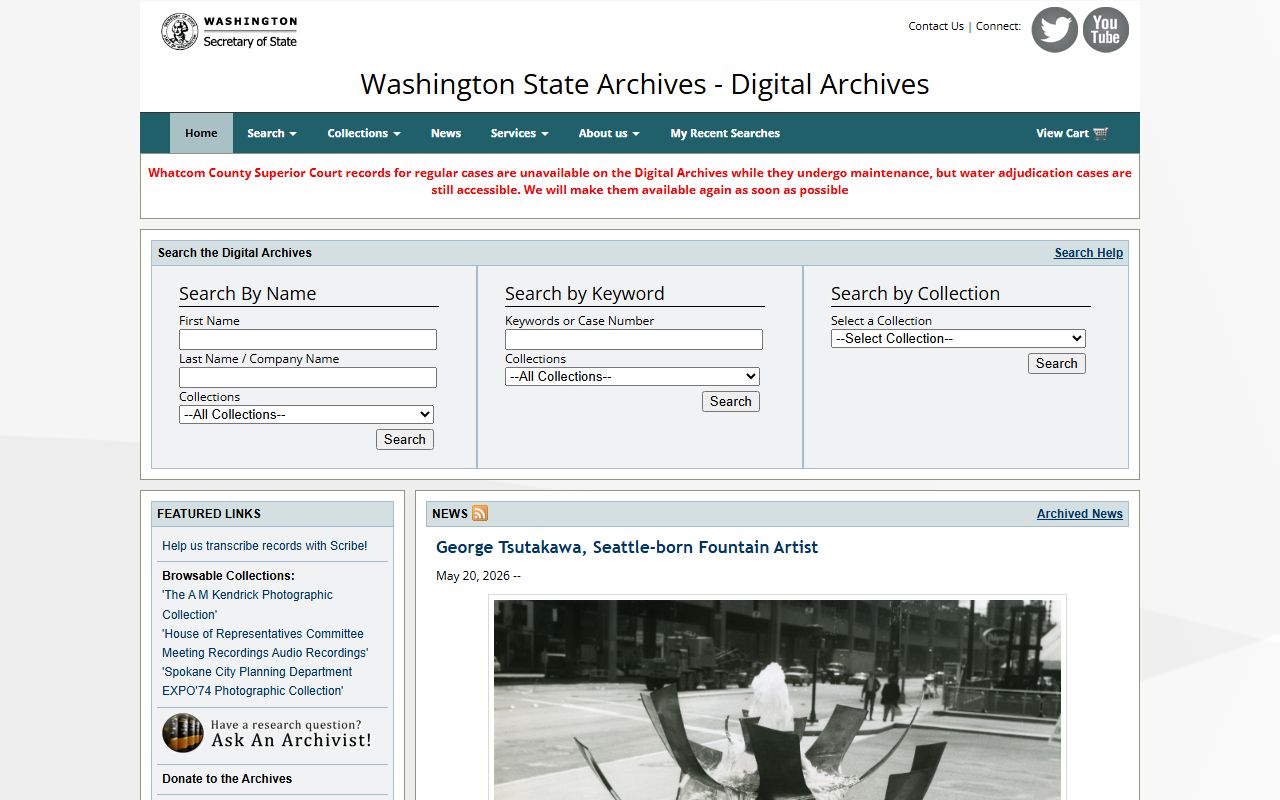
The Washington State Digital Archives is the resource the Clerk points general public users to for viewing and purchasing Superior Court documents, including probate filings.
To search for a Kitsap probate case online, go to the Digital Archives, select Superior Court Records, choose Kitsap County, and enter the case number with dashes or the party name. Documents appear listed under the Description column. A preview icon shows part of the document before you buy. If you need a certified copy rather than a digital one, contact the Clerk directly and follow the copy request process.
The statewide Washington Courts case search is a free tool for checking basic case data and court dates. It does not give you the full document, but it can confirm whether a probate case exists and what its current status is. For full documents, the Digital Archives or a Clerk copy request are the correct paths.
What Kitsap Probate Records Contain
A probate case file builds over the life of the estate. Early documents show the petition, the will (if one exists), and the order that opens the case. Later documents cover creditor notices, inventories of assets, accountings, and the distribution to heirs. The final document closes the case.
Wills filed with the court become public record once admitted to probate. That means the will itself, the list of assets in the inventory, and the names of heirs and creditors are all part of the public file in most cases. Guardianship and conservatorship files are also in Superior Court, though some portions of guardianship cases involving minors or incapacitated adults may be subject to court rules that limit access. If you are unsure whether a specific document is public, ask the Clerk before requesting it.
Certified copies of Letters Testamentary are the documents most people need from a probate file. These prove the executor's legal authority and cost $5 each from the Clerk. Request as many certified copies as you think you will need when you pick them up, since making multiple trips is inconvenient.
Guardianship and Conservatorship Records in Kitsap County
Guardianship and conservatorship cases open the same way as probate, through the Clerk in Room 202. The fees differ, and the forms are specific to each situation. The Clerk sells kits for new guardianships, periodic accountings, and both agreed and contested minor guardianships. Prices range from $10 for a periodic accounting kit to $50 for a contested minor guardianship kit.
Courthouse Facilitators are available in Kitsap County for Family Law and Title 11 guardianship matters. Facilitators give procedural help only. They do not fill out forms, and they cannot give legal advice. If your guardianship involves a disputed capacity determination or contested family situation, an attorney will be necessary. The Clerk links the Northwest Justice Project CLEAR line and Kitsap Legal Services for people who need legal help and cannot afford a private attorney.
Note: The Clerk can provide forms and filing logistics for guardianship cases, but guardianship carries fiduciary duties and legal deadlines; the Clerk's guide recommends consulting an attorney for additional help.